The history of Schiermonnikoog
The island of the grey monks
The name Schiermonnikoog means 'island of the grey monks': schier means grey, oog means island. In the Middle Ages the island belonged to the Cistercian monastery of Klaarkamp in Friesland. The monks wore habits of undyed, grey wool and so gave the island its name. The island is first mentioned in a document in 1440.
From the States of Friesland to the Stachouwer family
After the rise of Protestantism, the island came into the hands of the States of Friesland in 1580. To pay off debts, they sold it in 1640 for 18,151 guilders to Johan Stachouwer. The island remained in his family's possession until 1859; the family was later called Van Starkenborgh-Stachouwer. They laid the foundations of the village as you know it today: built in 'streken', long straight streets. The street names Voorstreek, Middenstreek, Langestreek and Noorderstreek still recall this.
Whaling
Before tourism arrived, whaling was the main source of work for the islanders. As a reminder, two whale jawbones have stood on the Willemshof in the village since 1951.
John Banck and the dyke
In 1859 John E. Banck bought the island. At his own expense he had the dyke built that protects the village from the sea, creating the Bancks polder. At his favourite spot on the dyke stands a stone bench overlooking the Wadden Sea. Islanders still know it as the Bank van Banck.
The Counts von Bernstorff
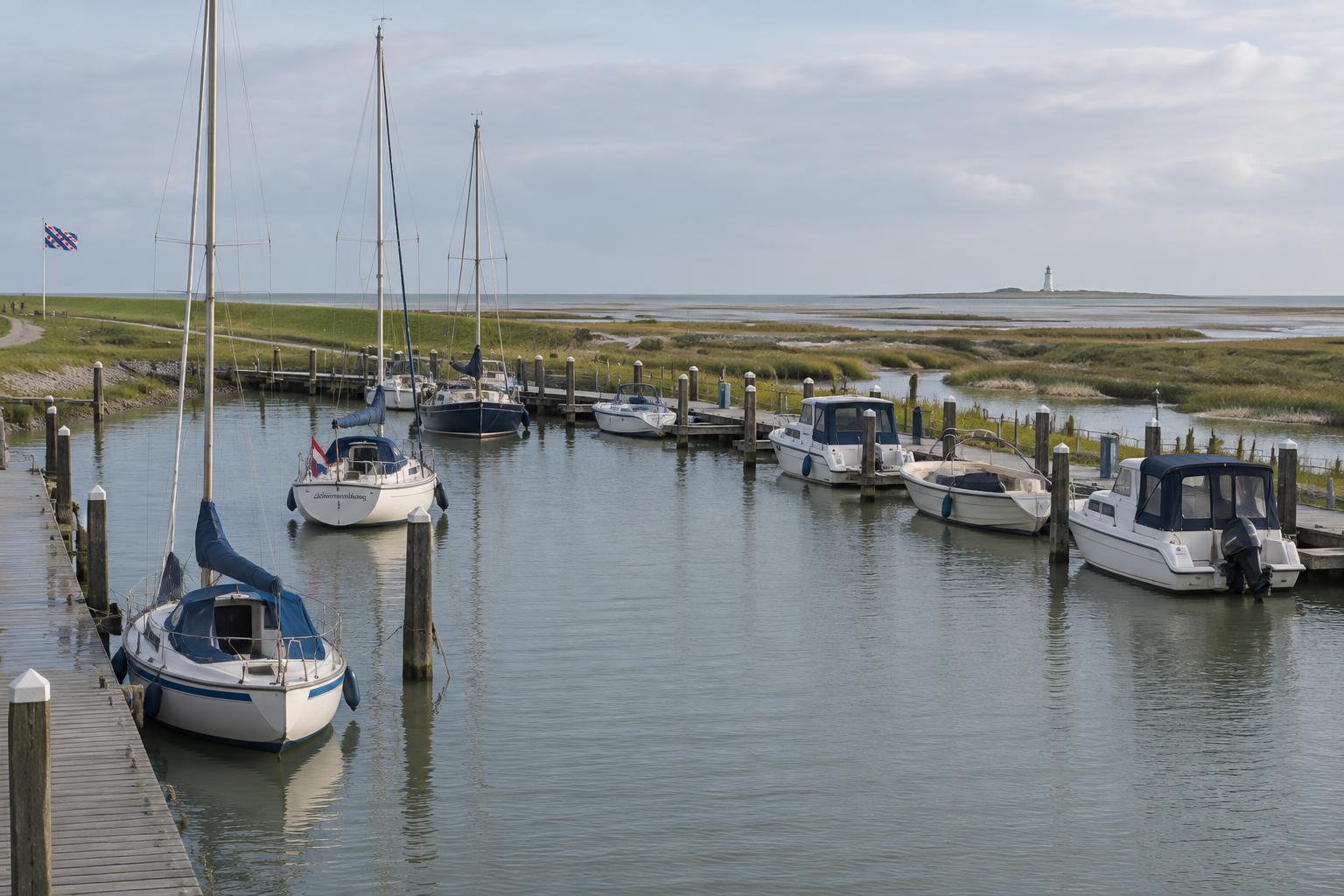
In 1878 the island was sold to the German Count Hartwig Arthur von Bernstorff. He had a pine forest planted for the timber trade and arranged for the construction of the first ferry pier, today's marina. After his death in 1940 his son inherited the island, just as the Second World War had begun.
After 1945: from private property to National Park
After the war the Dutch state regarded the island as enemy property. On 27 December 1945 it was confiscated, ending centuries of private ownership. Since 1989 almost the entire island has been a National Park.
Timeline: two world wars on Schiermonnikoog
The key events of the First and Second World War at a glance. Filter by war or tap an event for more explanation.
Sources
- NOS, “Schiermonnikoog viert nu pas 80 jaar bevrijding” (2025)
- VVV Schiermonnikoog, “80 jaar bevrijding Schiermonnikoog” (www.vvvschiermonnikoog.nl)
- Omrop Fryslân, “De bevrijding van Schier kwam pas weken later”
- Liberation Route Europe, “Schiermonnikoog in de Tweede Wereldoorlog”
- IsGeschiedenis, “Schiermonnikoog: klein eiland maar een grote Duitse spil”
Read more
Schiermonnikoog in the First World War
German sailors washed ashore, the founding of the Vredenhof cemetery for the drowned in 1917, and how to visit Vredenhof on the Reddingsweg.
Schiermonnikoog in the Second World War
Occupation in 1940, the Schlei bunker village and De Wasserman, Vredenhof in wartime and the late liberation on 11 June 1945.
Lytje Pole: the nickname of Schiermonnikoog
Lytje Pole means 'little island', Schiermonnikoog's nickname in the island language. About the Eilauners and where to find it.
Details checked: September 2026. Always check opening hours with the provider.
Staying on the island? Discover Hazelaar apartment
Hazelaar apartment in Boszicht, 450 m from the beach, for up to 5 guests.
Check availability